Interference and spillover effects in recommendation surfaces
Causal Inference
Interference
Spillovers
Recommendation Systems
A project studying how promoting one item affects both that item and nearby competing items when recommendation units interfere.
Decision Question
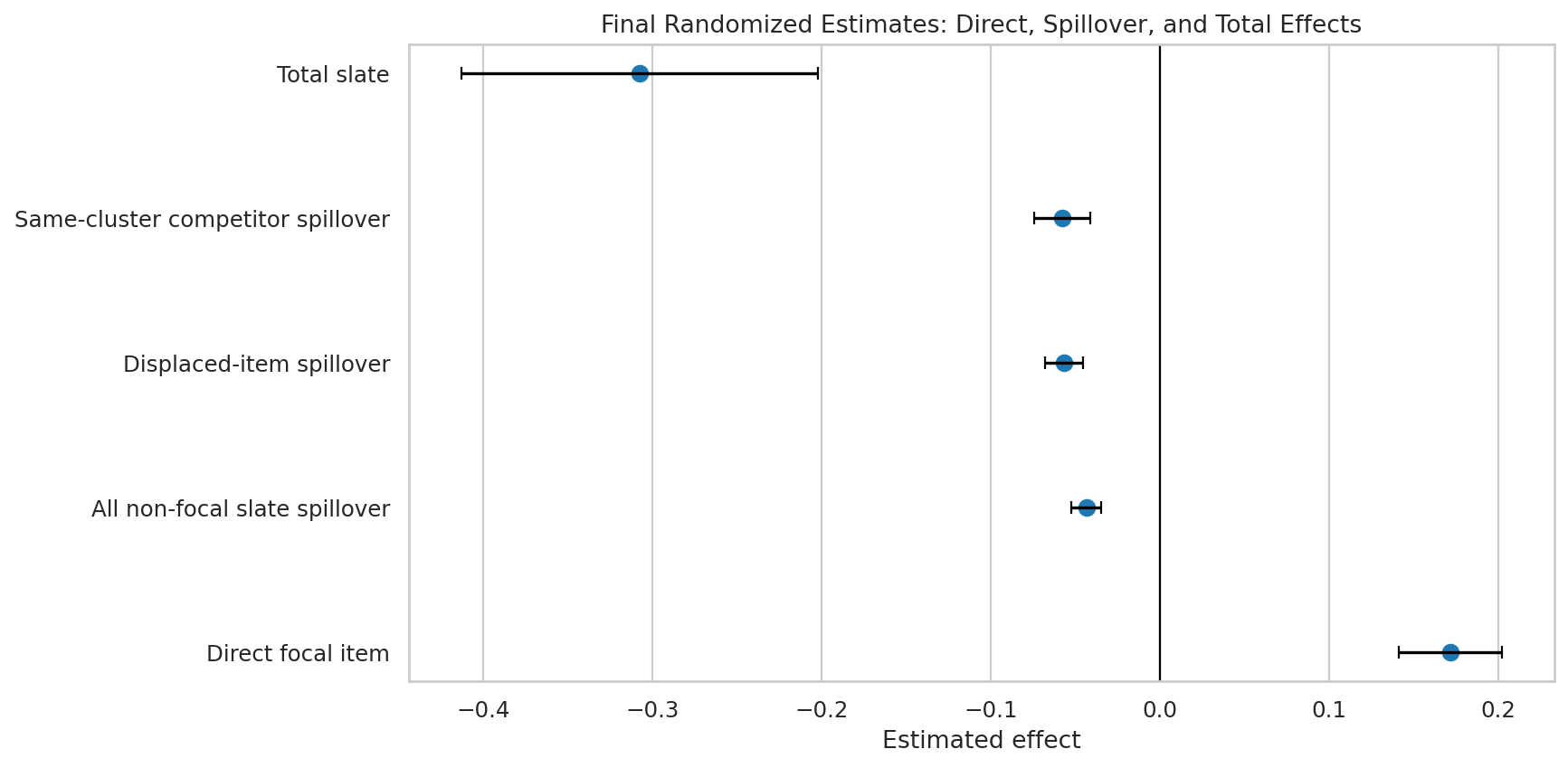
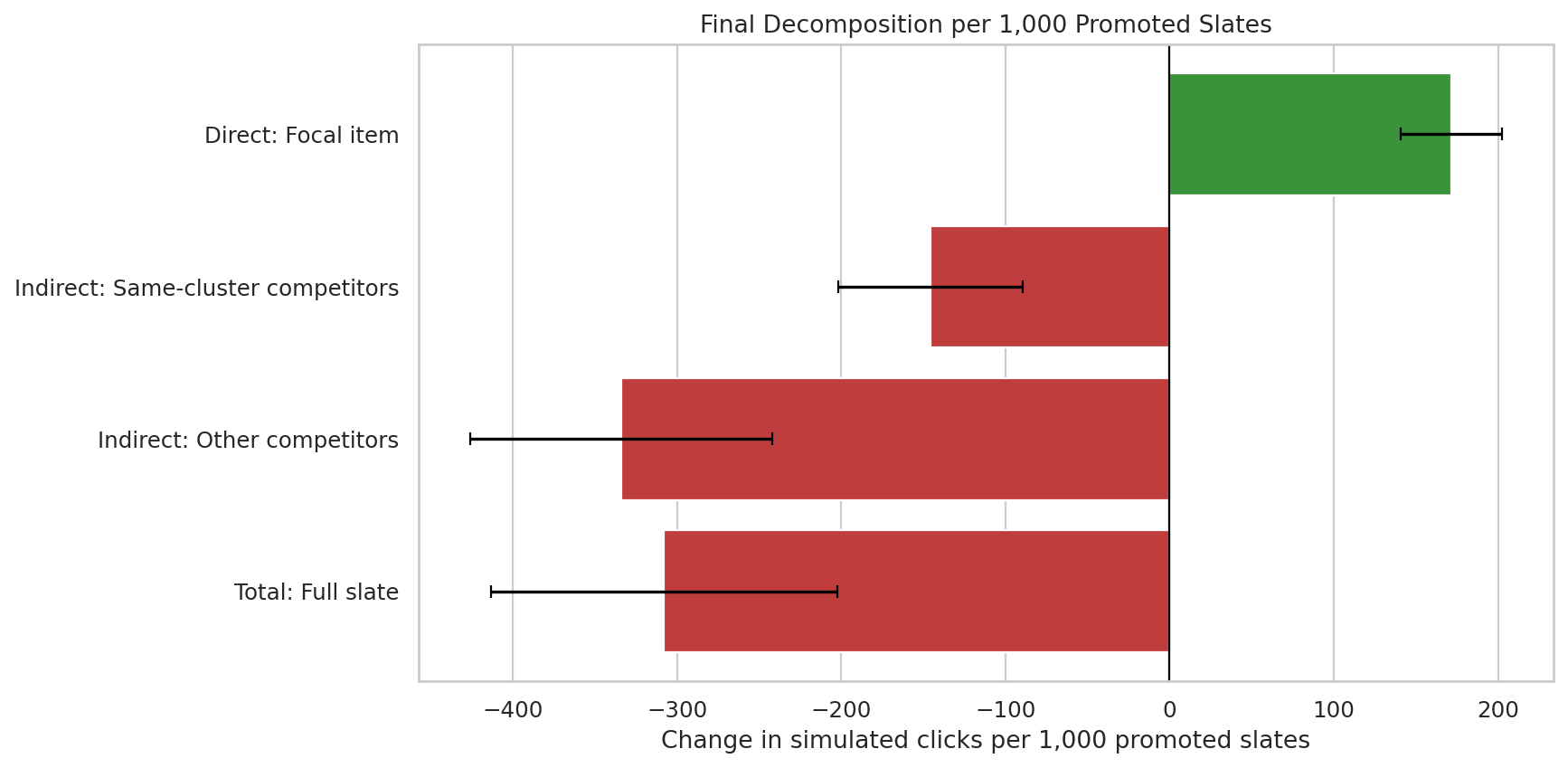
How does promoting one item affect both that item and nearby competing items in the recommendation surface?
Causal Setup
- Treatment is focal item promotion in simulated recommendation slates.
- Outcomes include direct item response plus nearby-item displacement or spillover response.
- The main design challenge is that standard no-interference assumptions do not hold.
Methods
- Spillover exposure mapping
- Cluster-randomized estimators
- Direct, indirect, and total effects
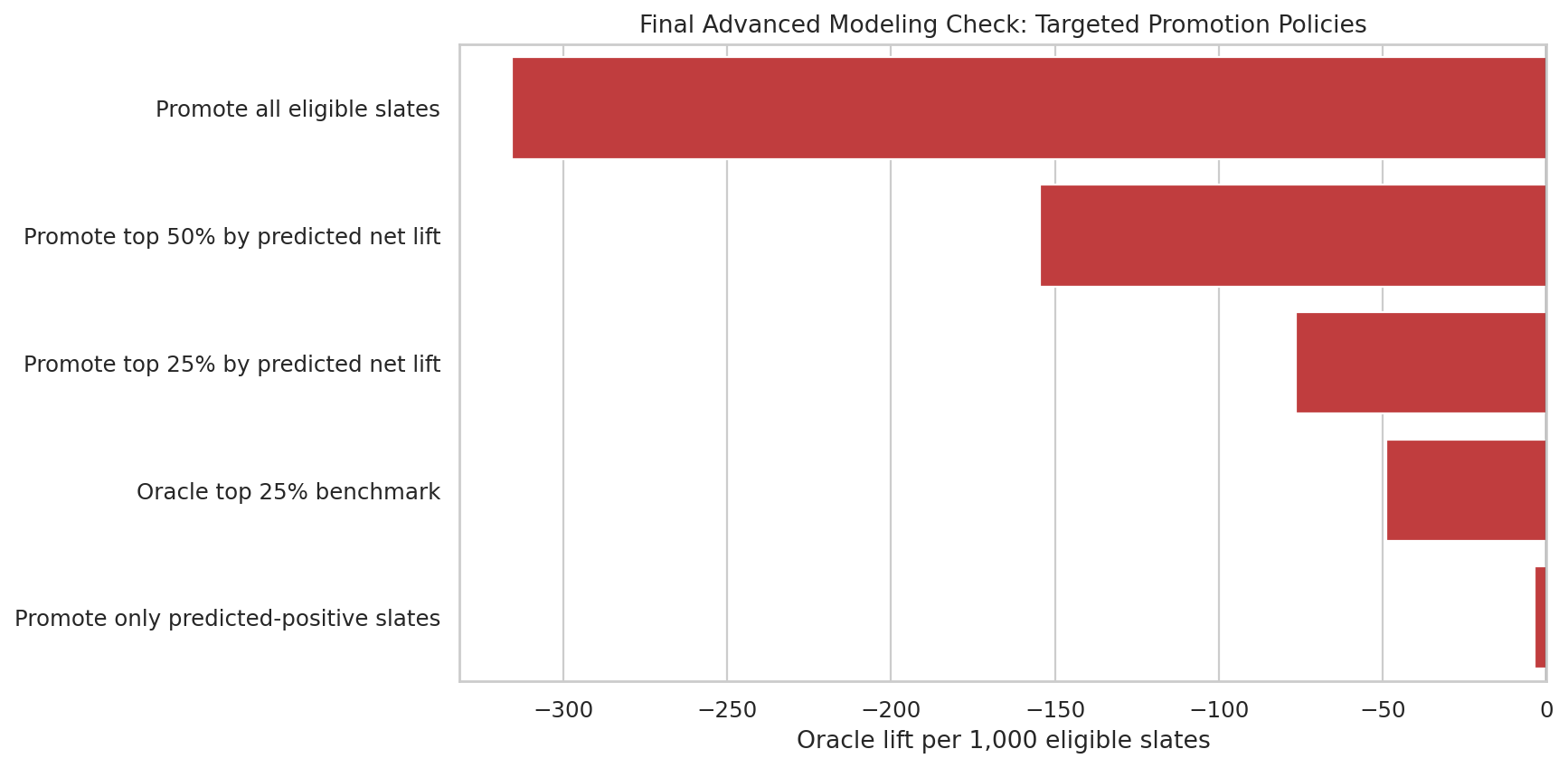
- Advanced spillover models
- Sensitivity checks and decision-oriented interpretation
Decision Takeaway
The project shows that causal claims in ranking and marketplace surfaces must account for displacement, spillovers, and constrained attention before they are used for policy decisions.
Selected Figures
Notebook Sequence
Generated Artifacts
Limitations
These notebook-driven causal analyses should be read with their identification assumptions, support diagnostics, measurement choices, and sensitivity checks in view.