Causal effect of ranking position on clicks
Causal Inference
Recommendations
AIPW
Causal ML
A notebook-driven causal inference project estimating whether top-3 recommendation exposure increases click probability in MIND impression logs.
Decision Question
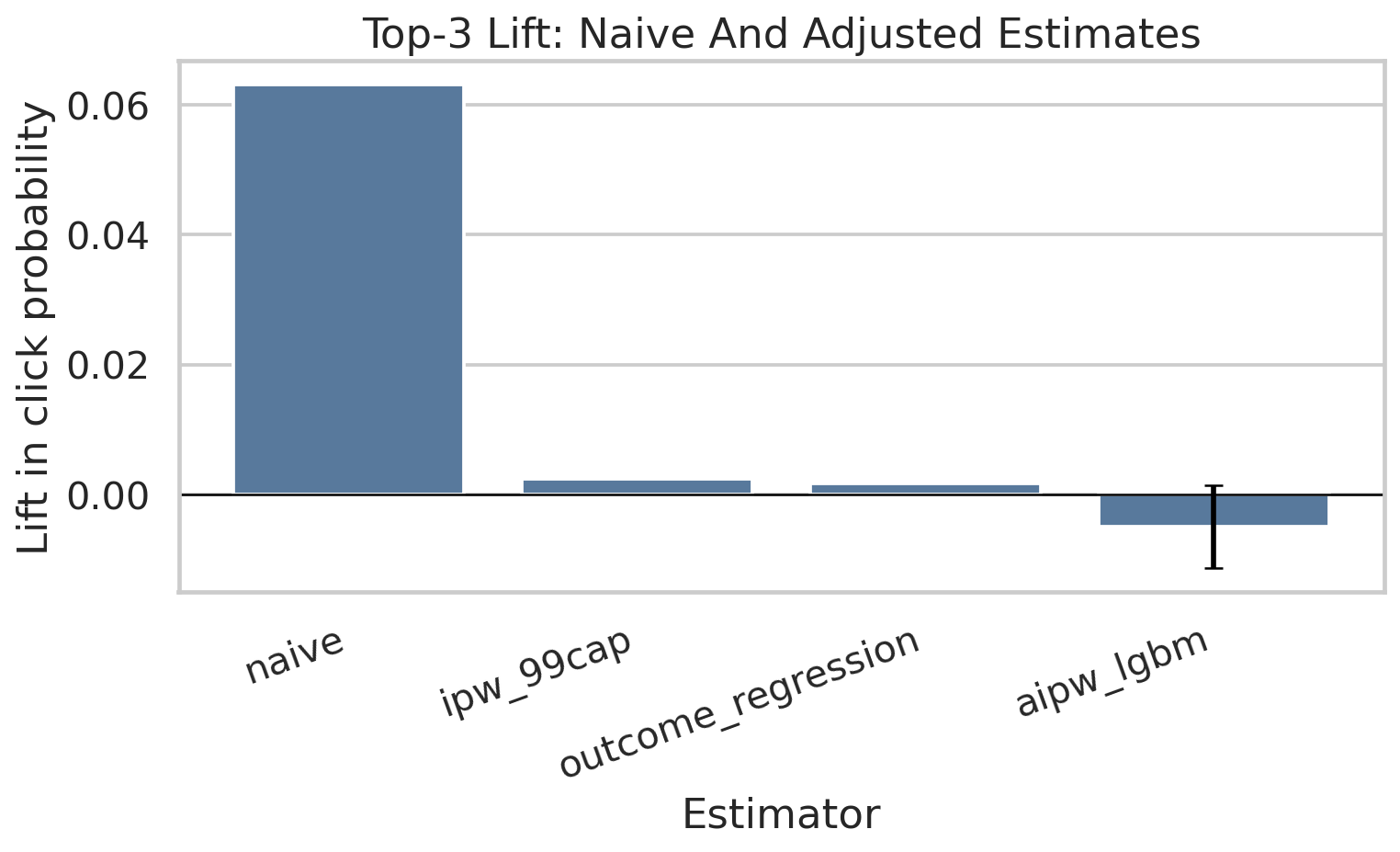
Does placing a news item in the top 3 recommendation positions cause more clicks, or are top-ranked items simply more relevant and therefore more likely to be clicked anyway?
Causal Setup
- Treatment is whether the item appears in the top 3 recommendation positions.
- Outcome is click on the displayed item.
- Adjustment uses user history, item metadata, slate size, time context, and item exposure features.
Methods
- Propensity modeling and IPW
- Doubly robust / AIPW estimation
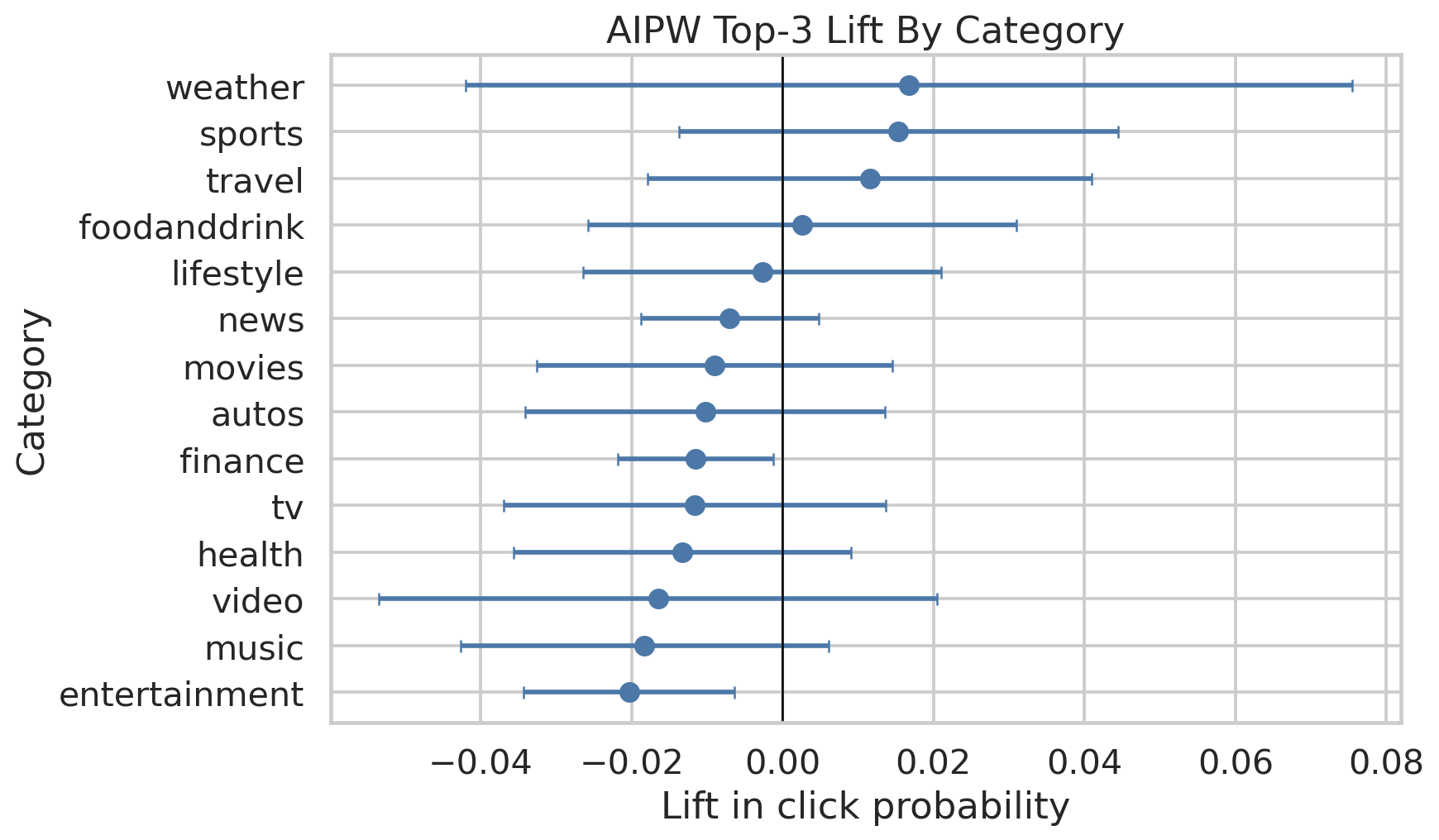
- Heterogeneous effects
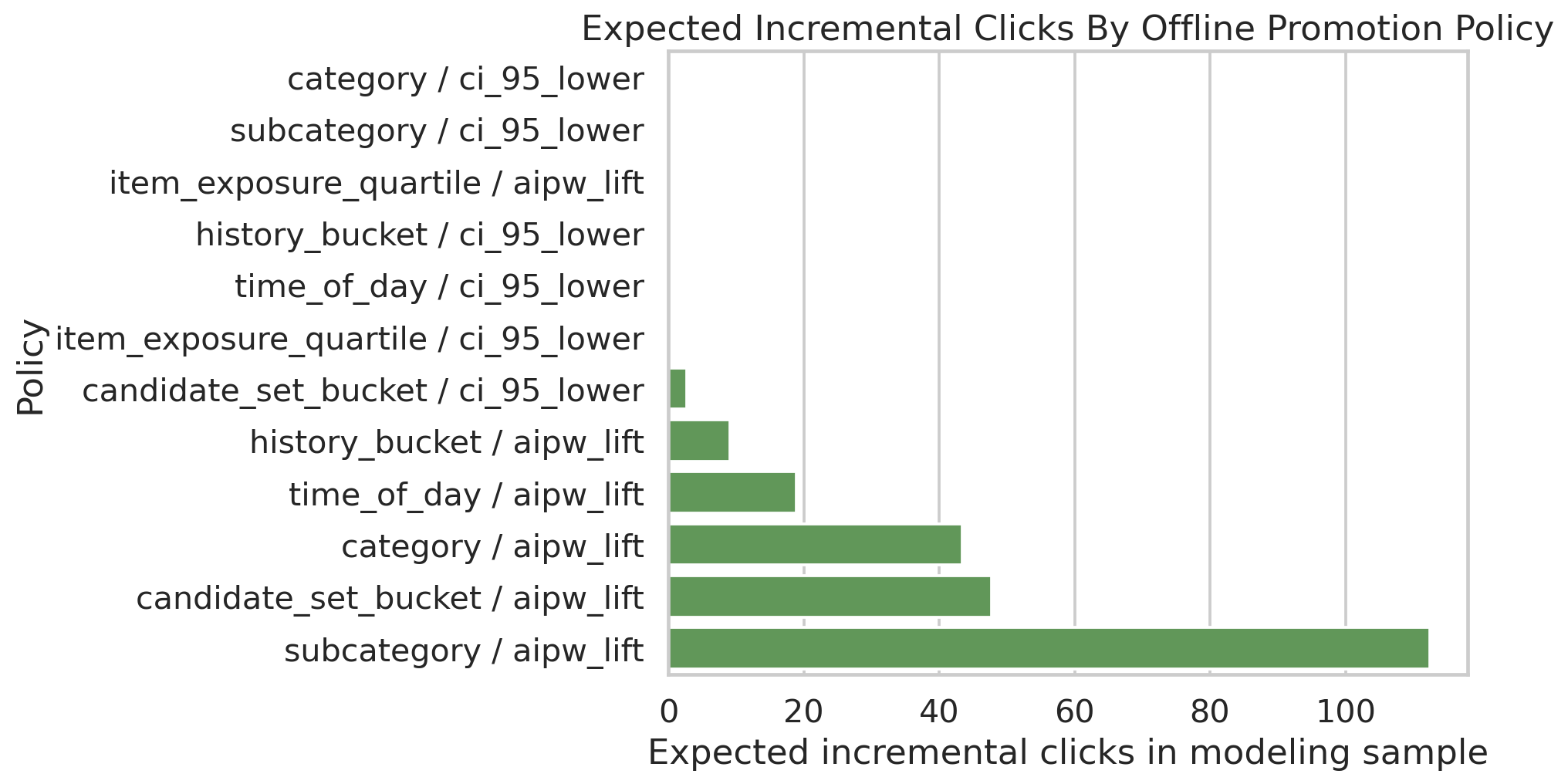
- Policy simulation
- ML nuisance models and EconML extensions
Decision Takeaway
The project demonstrates the full applied causal workflow, including confounding checks, adjustment, doubly robust estimation, heterogeneity, policy simulation, and sensitivity analysis for a ranking decision.
Selected Figures
Notebook Sequence
Generated Artifacts
Limitations
These notebook-driven causal analyses should be read with their identification assumptions, support diagnostics, measurement choices, and sensitivity checks in view.