Long-term causal effects of recommendation exposure
Causal Inference
Longitudinal Data
Marginal Structural Models
G-Computation
A sequential causal project estimating whether short-term recommendation exposure affects longer-term engagement and retention-style outcomes.
Decision Question
How do sequential recommendation exposures affect future engagement or retention?
Causal Setup
- Treatment is short-term recommendation exposure across time.
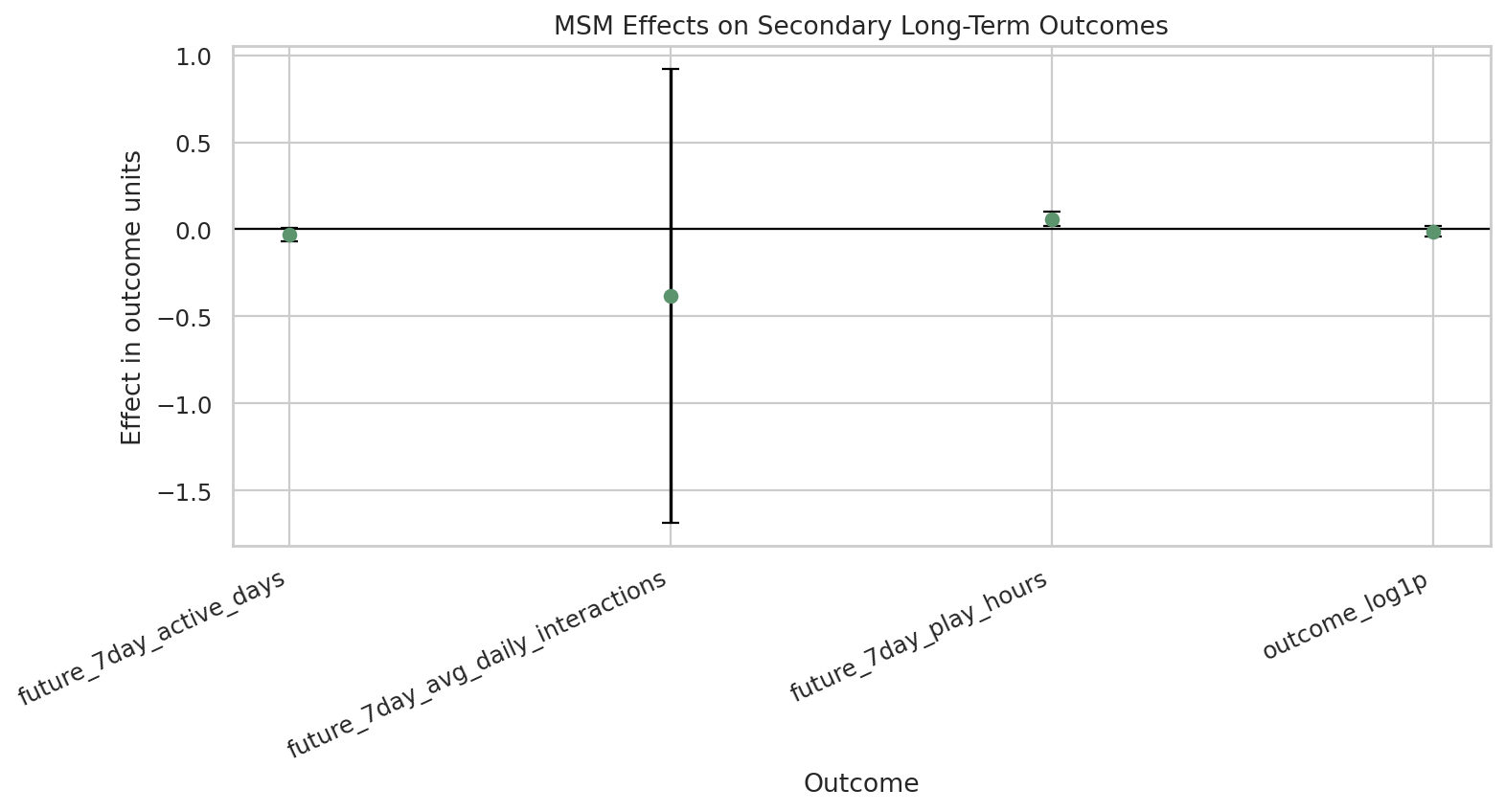
- Outcome is future engagement and retention-style behavior.
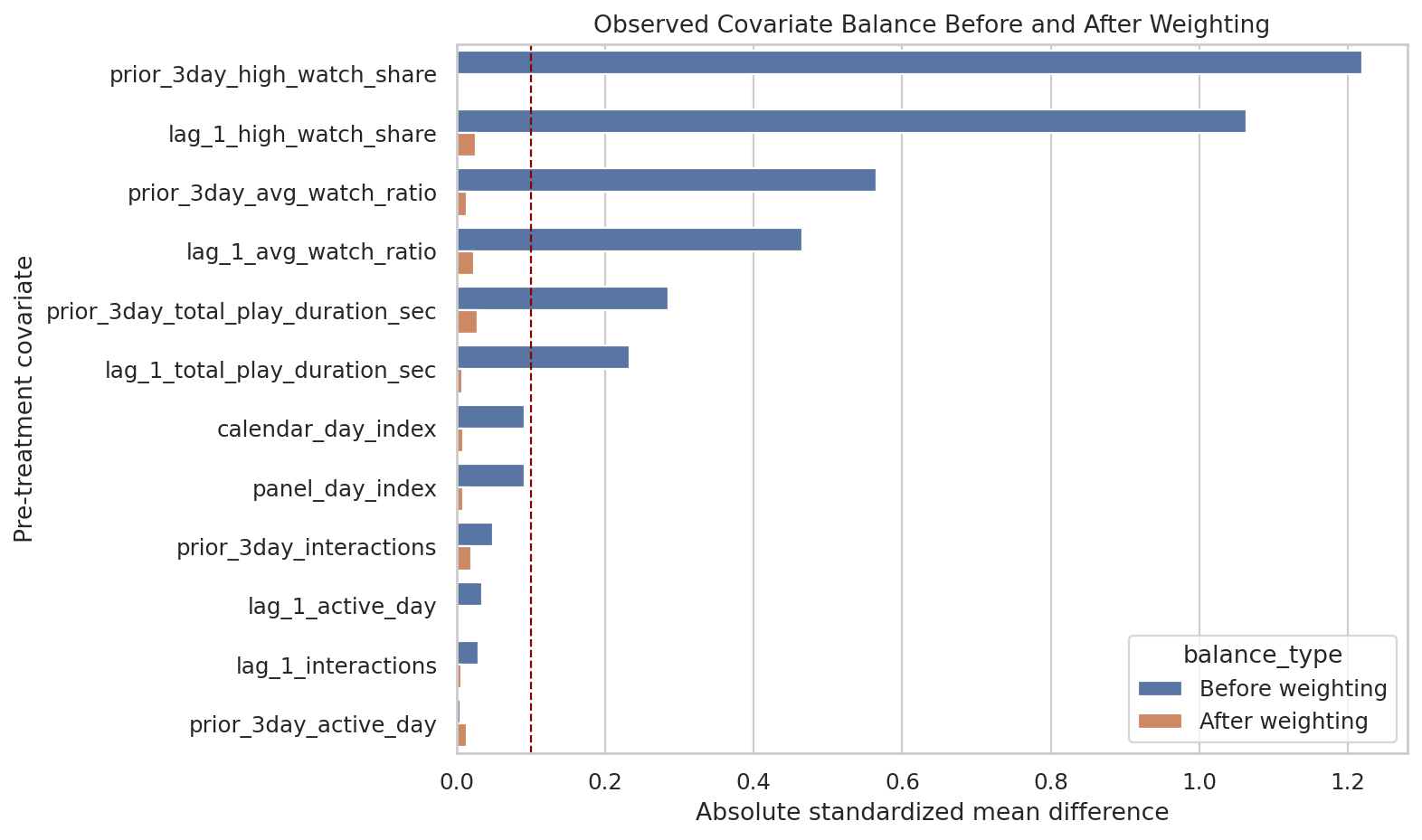
- The main design challenge is time-varying confounding affected by prior exposure.
Methods
- Long-term outcome definition
- Time-dependent propensity weights
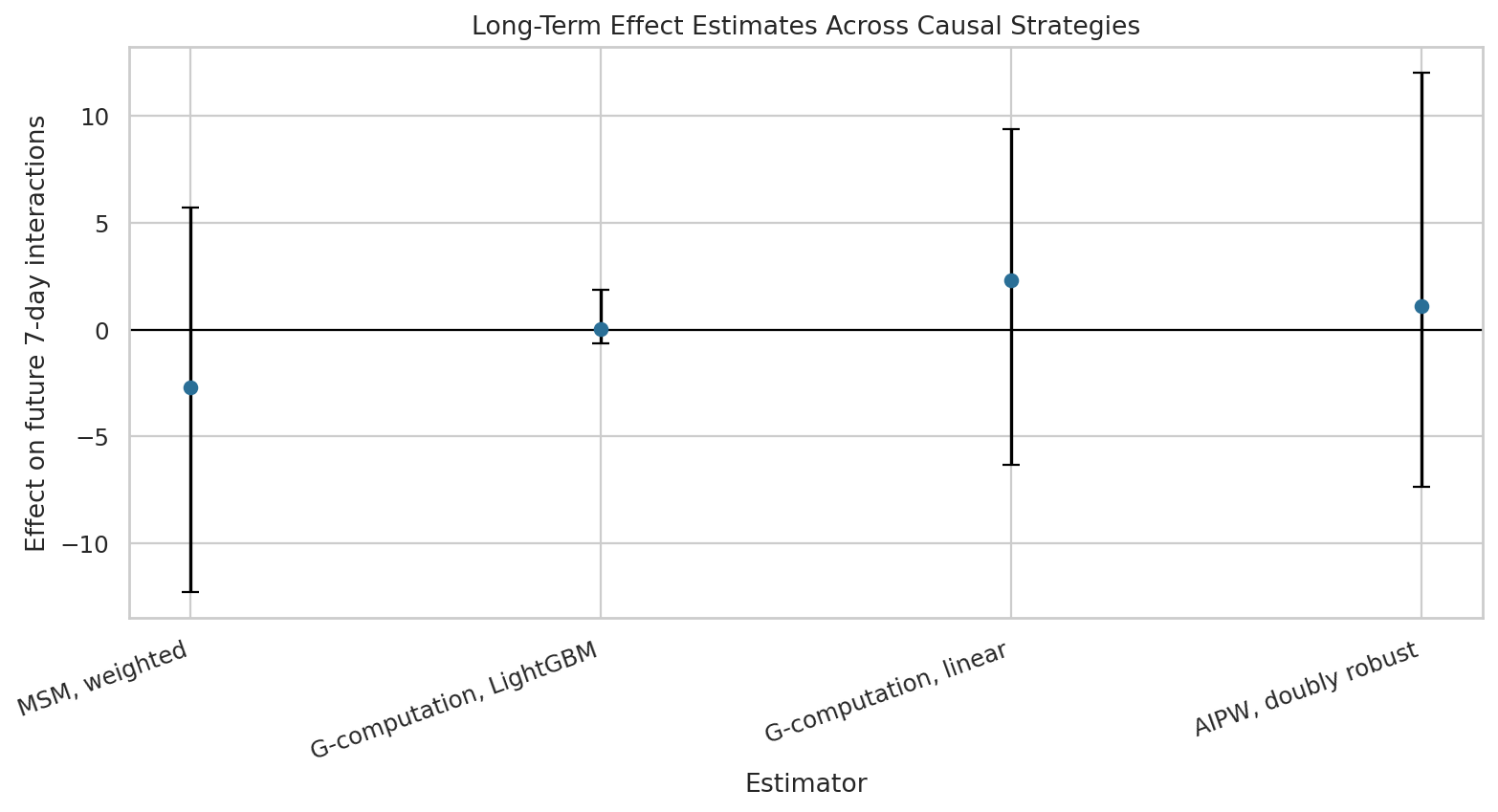
- Marginal structural models
- G-computation
- Doubly robust and heterogeneous effect analysis
Decision Takeaway
The project shows that durable value often requires sequential estimands, time-varying diagnostics, and longer-horizon outcome definitions.
Selected Figures
Notebook Sequence
- Notebook 01: KuaiRec Sequence EDA for Long-Term Causal Effects
- Notebook 02: Defining the Long-Term Causal Estimand
- Notebook 03: Time-Varying Confounding and Propensity Weights
- Notebook 04: Marginal Structural Model for Long-Term Effects
- Notebook 05: G-Computation for Long-Term Effects
- Notebook 06: Doubly Robust Heterogeneous Effects
Generated Artifacts
Limitations
These notebook-driven causal analyses should be read with their identification assumptions, support diagnostics, measurement choices, and sensitivity checks in view.